What galvanic isolation means
Two circuits are galvanically isolated when no current can flow directly from one to the other; energy passes only through a magnetic field. A transformer with separate primary and secondary windings does this. The output can then be referenced to earth in a new way, independent of what the supply side is doing.
In UPS terms, there are two ways to get isolation:
- Transformer-based online UPS – the output transformer after the inverter provides it as part of the design.
- High-frequency online UPS plus an isolation transformer – a separate transformer, usually on the output, added to a transformerless unit.
A transformerless high-frequency UPS without an added transformer provides no galvanic isolation. Its input and output neutrals are connected, and its static bypass connects the load straight to mains.
Problem 1: poor earthing and floating neutral
On many industrial sites, and on grids in developing regions, the supply neutral is not well tied to earth, or is shared with heavy loads elsewhere on the network. The result is a voltage between neutral and earth at the equipment, sometimes several volts, sometimes tens of volts.
Controllers, instruments, medical devices and network equipment may misbehave, show communication errors or refuse to start when neutral-to-earth voltage is high. Some manufacturers specify a maximum in their installation manuals.
An isolation transformer solves this locally. Its secondary is a separately derived source: you bond the new neutral to the local earth at the transformer, and neutral-to-earth voltage at the load falls to a low value regardless of the supply. The earthing system downstream can also be changed, for example from an incoming TT or IT arrangement to TN-S for the load.
Problem 2: electrical noise
Industrial supplies carry noise from drives, welders, contactors and switching power supplies. It appears in two forms:
| Noise type | Where it appears | Effect of an isolation transformer |
|---|---|---|
| Normal-mode (line to neutral) | Between the live conductors | Reduced by the online conversion itself |
| Common-mode (line or neutral to earth) | Between conductors and earth | Strongly attenuated, especially with an electrostatic screen between windings |
Common-mode noise is the harder one to deal with and the one that causes unexplained resets and data errors. A shielded isolation transformer is one of the most effective tools against it.
Problem 3: unstable and generator-fed grids
An online double-conversion UPS already decouples output voltage and frequency from the input. The transformer adds robustness on top:
- Spikes and surges that get through the input stage are further damped by the transformer’s impedance.
- Earth-potential shifts during faults elsewhere on the network are not passed to the load reference.
- Generator supplies, which often have a weakly referenced neutral, can be given a solid local neutral-earth bond at the UPS output.
Problem 4: harsh industrial loads
Motors, pumps, compressors and transformers draw several times their running current when they start. A transformer-based UPS, with its output transformer and heavier power stage, tolerates these surges better than a transformerless unit, which must rely on its inverter current limit and static bypass.
The transformer also helps with:
- Fault clearing. Enough current into a downstream short circuit to trip the right breaker.
- Unbalanced loads. Depending on winding arrangement, single-phase loads on a three-phase output are better tolerated.
- DC components. The transformer blocks DC from reaching the load side.
Where to put the transformer
The position decides what you protect.
| Position | What it isolates | Watch out for |
|---|---|---|
| Output, after the inverter (built into transformer-based units) | Load from inverter and DC bus | On bypass, the load may be connected to mains without isolation |
| Output, after the bypass join | Load from both inverter and bypass paths | Larger transformer; its losses run all the time |
| Bypass line | Bypass path only | Needed when the bypass supply has a different earthing system |
| Input | UPS and load from mains | Helps with earthing and noise but not with what the UPS itself creates |
If isolation must be continuous, including during bypass and maintenance bypass, ask for the single-line diagram and check where every path joins the output.
Costs and trade-offs
Isolation is not free:
- Efficiency. A transformer loses energy continuously, both in its core and windings.
- Size and weight. Line-frequency transformers are heavy. Check floor loading and lifting.
- Inrush. Energising a transformer draws a large magnetising current. Upstream breakers and generators must allow for it.
- Cost. More copper and steel than a transformerless unit of the same rating.
For IT loads on a well-earthed building supply, these costs are rarely justified. For factories, process plants, substations, oil and gas sites, hospitals with poor supplies and remote sites on weak grids, they often are.
How to decide
Specify isolation when one or more of these is true:
- The equipment manufacturer sets a maximum neutral-to-earth voltage that the site cannot meet.
- The site earthing is poor, the neutral floats, or the supply earthing system differs from what the load requires.
- There are unexplained resets or communication errors traceable to common-mode noise.
- The load includes motors, compressors or transformers with high starting current.
- The electrical specification explicitly requires galvanic isolation.
If none apply, a transformerless high-frequency online UPS is usually the more efficient and compact choice. Read more in our transformer-based vs transformerless guide.
Our options
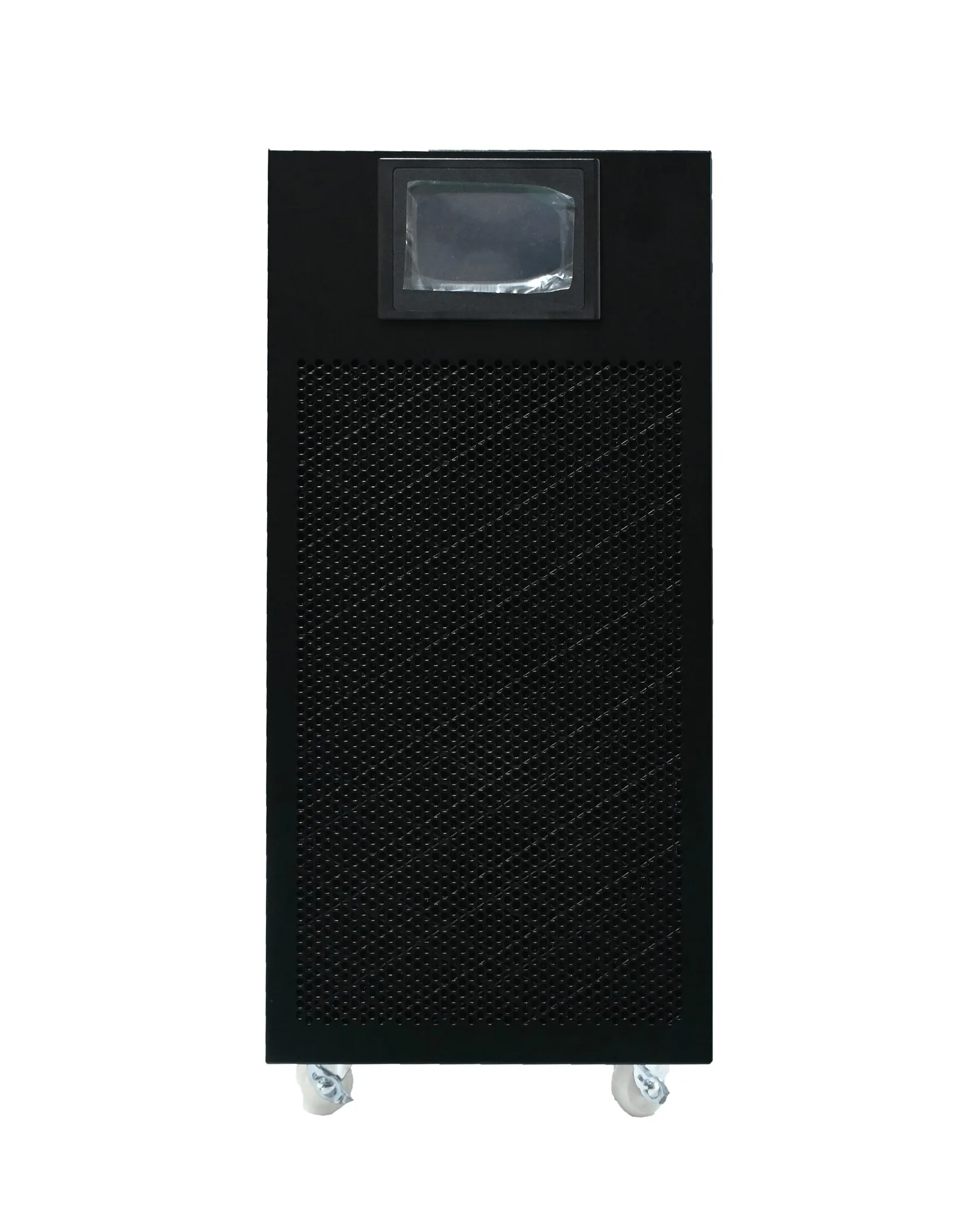
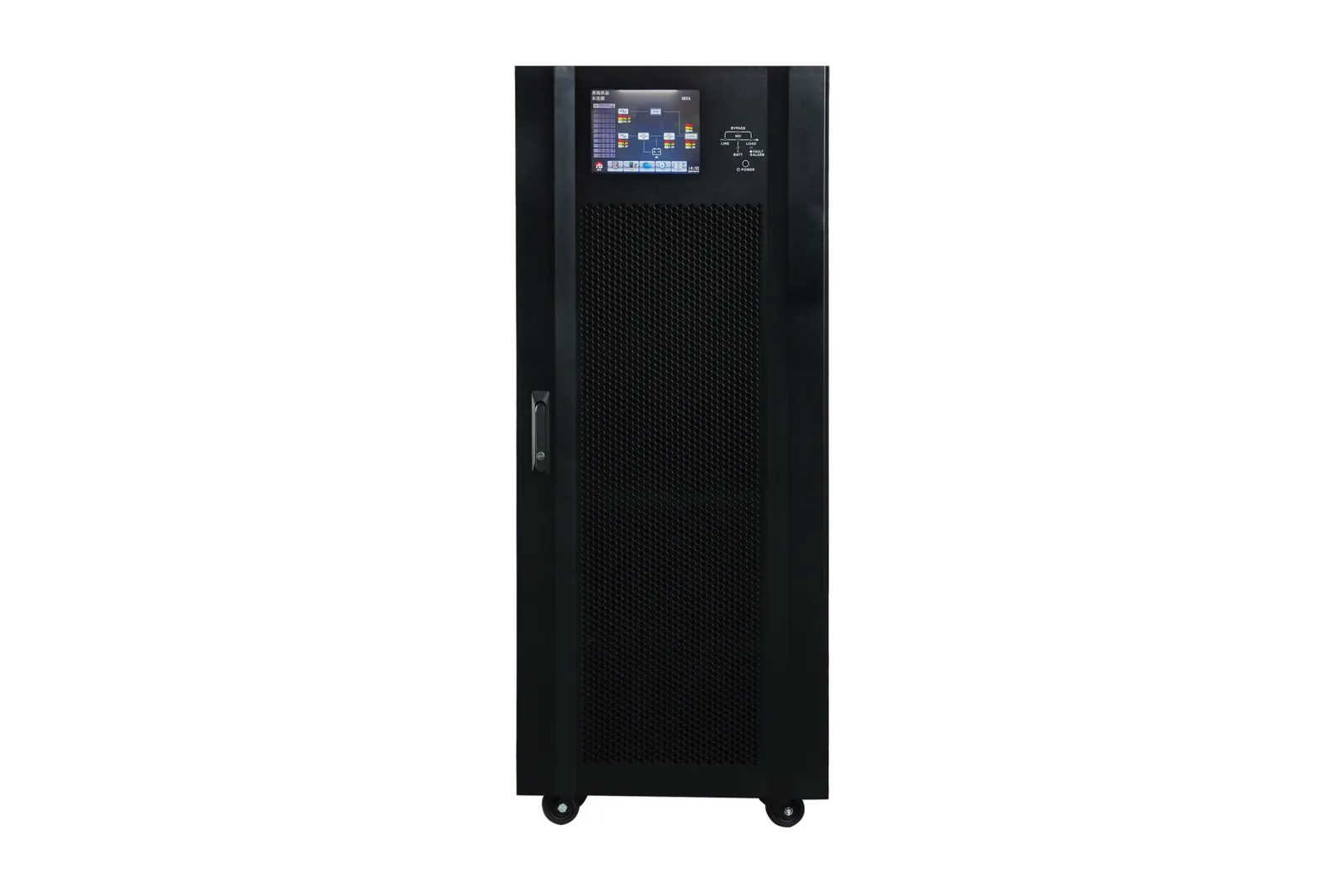
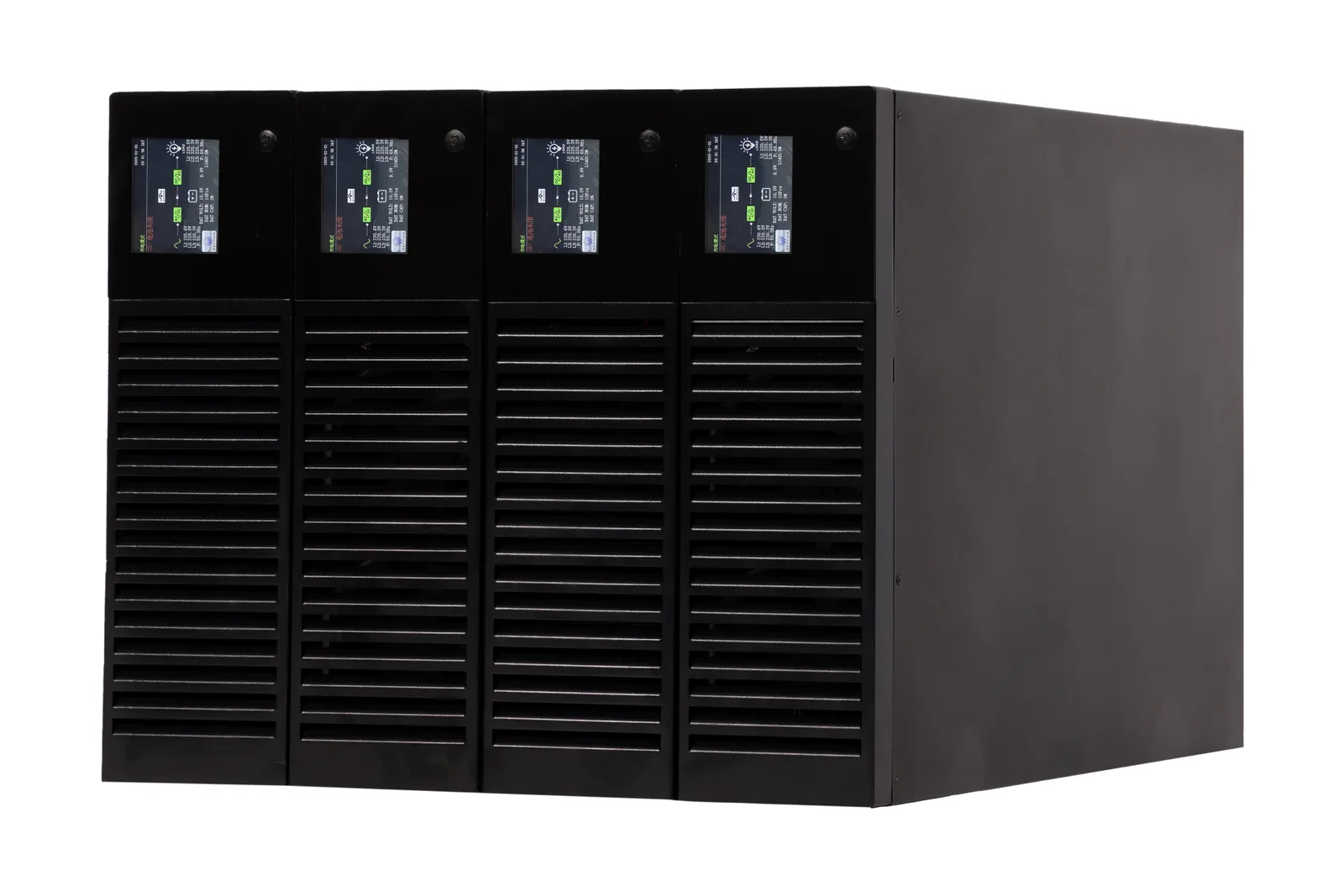
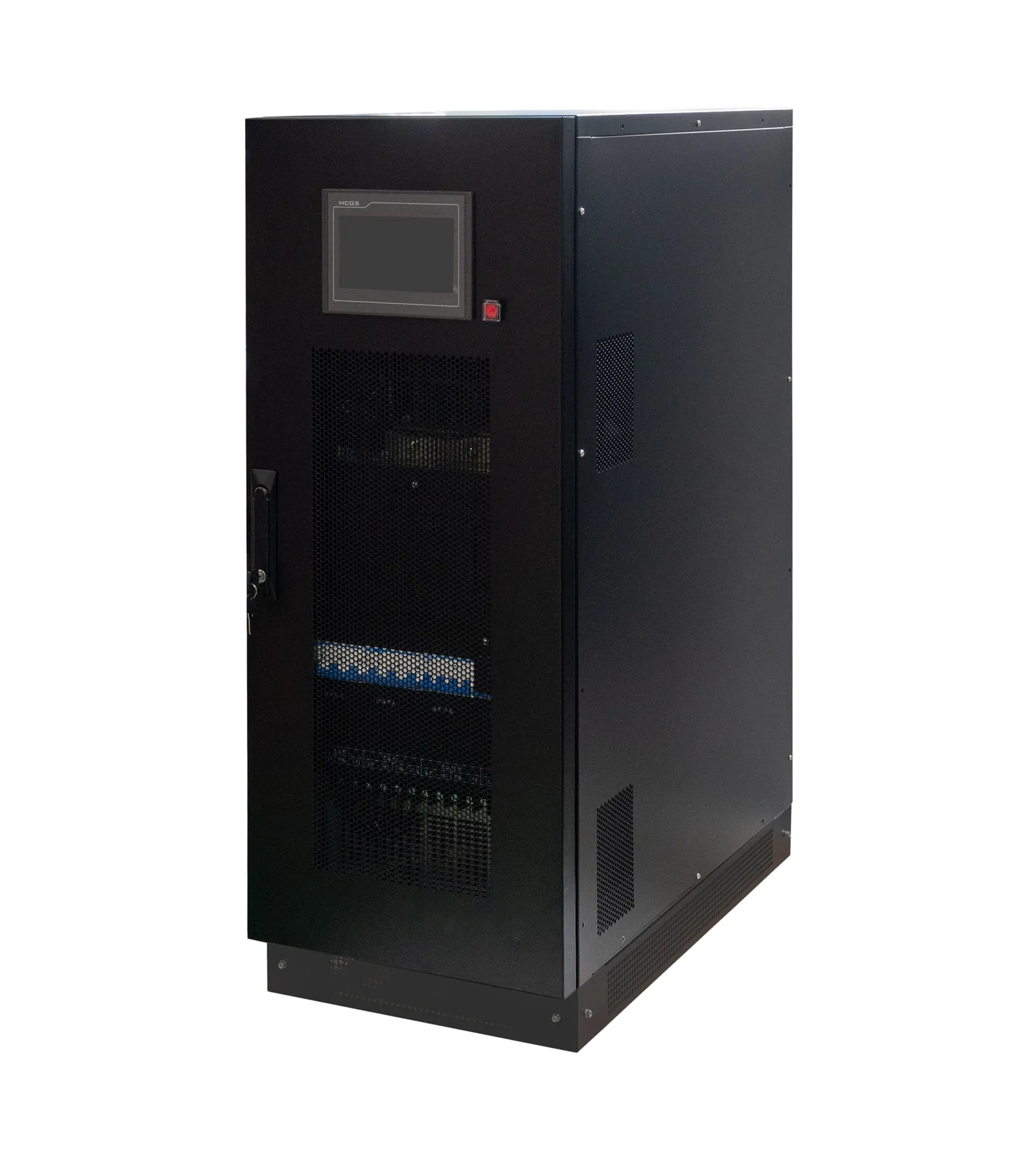
Our X11, X31 and X33 transformer-based industrial series include an output isolation transformer: single-phase 1–40 kVA, three-phase in / single-phase out 6–120 kVA, and three-phase 10–800 kVA, with output power factor 0.8 on the three-phase models. For electronic loads where isolation is needed only occasionally, our H11, H31 and H33 high-frequency online series (1–600 kVA, CE tested to EN IEC 62040-1 and EMC) can be paired with an external isolation transformer.
Related products
- Industrial transformer-based UPS
- Three-phase industrial UPS, 10–800 kVA
- Three-phase online UPS
- Single-phase online UPS
Send your earthing system, supply details and load list through the contact page and we will recommend where isolation is needed and how to provide it.