Two chemistries, one job
A UPS battery spends almost all its life on float charge, waiting. Then, a few times a year or less, it must deliver high power for minutes. Both lead-acid and lithium-ion can do this well. They differ in how long they last, how much space they take, how they react to heat and what they cost over time.
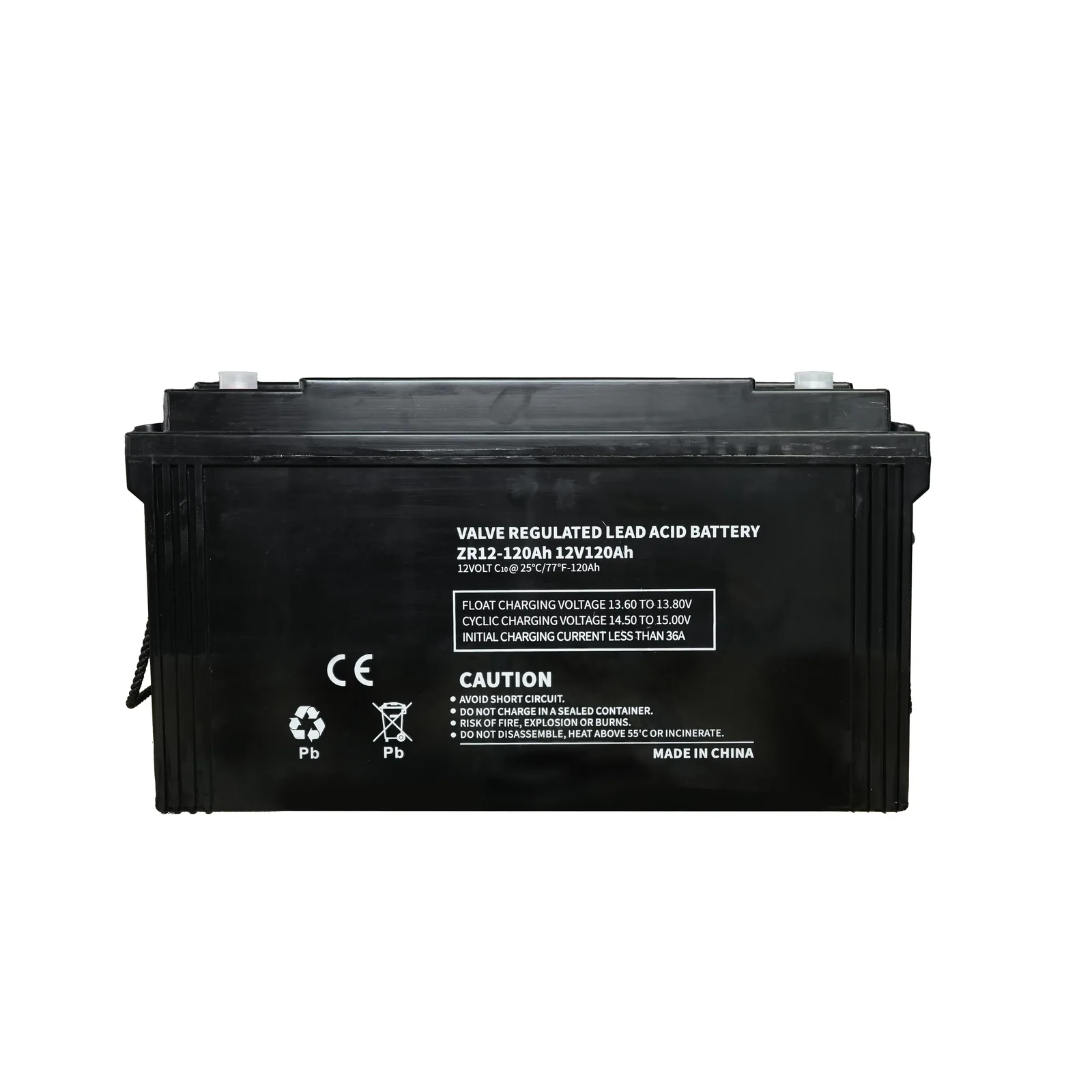
- VRLA (valve-regulated lead-acid) – sealed lead-acid blocks, usually AGM, sometimes gel. The traditional UPS battery: cheap, familiar, recyclable, widely available.
- LiFePO4 (lithium iron phosphate) – the lithium chemistry most used for UPS and telecom backup. Supplied as modules or rack batteries with a built-in battery management system (BMS).
Comparison at a glance
| VRLA lead-acid | LiFePO4 lithium-ion | |
|---|---|---|
| Typical service life at 25 °C | Roughly 3–5 years for standard blocks; longer for long-life designs | Several times longer in typical UPS duty |
| Cycle life | Hundreds of cycles, fewer at deep discharge | Thousands of cycles in typical ratings |
| Weight for the same energy | Heavy | Much lighter |
| Footprint for the same runtime | Larger | Smaller |
| Heat tolerance | Life falls sharply above 25 °C | More tolerant of warm rooms |
| Recharge time | Slow; many hours to full | Faster |
| Monitoring | Optional external monitoring | BMS built in; cell-level data |
| Upfront cost | Low | Higher |
| Replacement over 10 years | Usually one or more full replacements | Often none |
| Transport | Generally simple | Classed as dangerous goods; UN38.3 tested packs required |
The figures above are general and depend on the product, temperature and discharge pattern. Use the battery manufacturer’s data for any project calculation.
Service life and temperature
Lead-acid life is driven mostly by temperature and float voltage, not by how many times the battery is used. A common rule of thumb is that VRLA life roughly halves for every 10 °C of sustained operation above 25 °C. A battery rated for five years in a cooled room may need replacing after two or three in an unconditioned plant room or a hot climate.
LiFePO4 also ages faster in heat, but less steeply, and it does not suffer from sulphation if left partly discharged. For sites where the battery room cannot be kept at 20–25 °C, this is often the deciding factor.
Cycle life matters where the grid is poor. If the battery is discharged several times a week, a VRLA string wears out early. LiFePO4 handles frequent cycling much better.
Space, weight and floor loading
For the same backup energy, a lithium-ion battery cabinet is typically a fraction of the weight of a VRLA cabinet and needs less floor area. This matters on upper floors, raised floors and in containers or telecom shelters, and it reduces freight cost.
For long runtimes, the difference grows. A one-hour VRLA string for a large UPS can fill several cabinets; the lithium equivalent is more compact.
Safety
Both chemistries are safe when correctly specified, installed and maintained.
- VRLA – releases small amounts of hydrogen, especially when overcharged, so rooms need ventilation according to local rules. Thermal runaway can occur in hot, overcharged strings.
- LiFePO4 – among the more thermally stable lithium chemistries. Packs rely on the BMS to protect against overcharge, over-discharge, over-current and temperature extremes. Follow local fire codes for lithium installations, which may set limits on quantity, spacing or detection.
Compatibility with the UPS
A battery is part of the UPS system, not an accessory. Before choosing lithium-ion:
- Charger settings. Float and charge voltages, current limits and end-of-discharge voltage must match the battery.
- DC voltage window. The battery string voltage must sit inside the UPS DC input range at full charge and at end of discharge.
- BMS communication. Many lithium systems need the UPS to read the BMS status so the inverter can shut down or alarm correctly.
- Protection. DC breakers and fuses must be sized for the higher short-circuit current lithium packs can deliver.
Mixing chemistries or ages in one string is never a good idea. Replace a VRLA string as a whole rather than block by block where possible.
Lifetime cost
Upfront, a lithium-ion battery costs more than VRLA for the same energy. Over the life of a UPS, the comparison changes:
- A VRLA string may be replaced more than once in a ten-year system life, each time with material, labour, possible downtime and disposal cost.
- A cooled room for VRLA costs energy; lithium may allow a higher room set-point.
- Lighter, smaller batteries may avoid floor strengthening or free up space.
For short-lived installations, small single-phase systems or tight budgets, VRLA usually remains the economic choice. For large three-phase systems, warm rooms, frequent outages or long planned service lives, lithium-ion often wins on total cost.
Monitoring either chemistry
Most unexpected UPS failures during an outage trace back to the battery. A lithium pack reports cell data through its BMS. A VRLA string reports nothing on its own unless you add a monitoring system that tracks block voltage, internal resistance and temperature. Either way, monitoring lets you replace weak blocks before they fail under load.
How to decide
Choose VRLA when:
- the budget is tight and the room is cooled;
- runtime is short and outages are rare;
- the system will be replaced within a few years anyway.
Choose LiFePO4 when:
- the room is warm or hard to cool;
- outages are frequent, so the battery cycles often;
- space or floor loading is limited, or runtime is long;
- you want to avoid battery replacements over the system life.
What we supply
- Lithium-ion UPS systems from 1 to 600 kVA.
- LiFePO4 rack batteries at 48 V and 51.2 V, 20–200 Ah.
- VRLA batteries, 12 V blocks from 24 to 250 Ah.
- A battery online monitoring system for battery strings.
Related products
- Lithium-ion UPS, 1–600 kVA
- LiFePO4 rack battery, 48 V / 51.2 V
- VRLA battery, 12 V
- Three-phase online UPS and modular online UPS
Tell us the load, the runtime and the room temperature through the contact page, and we will size both options so you can compare them.