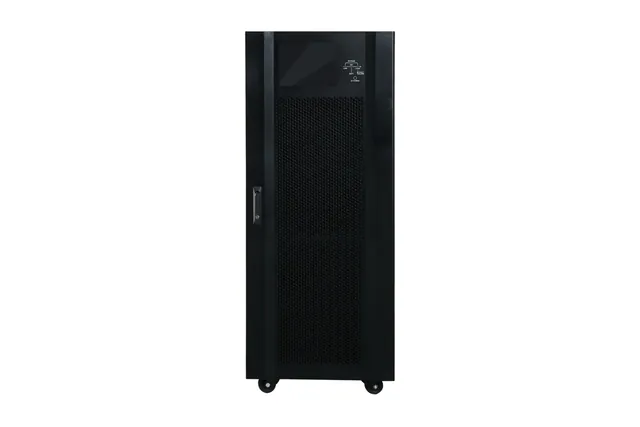
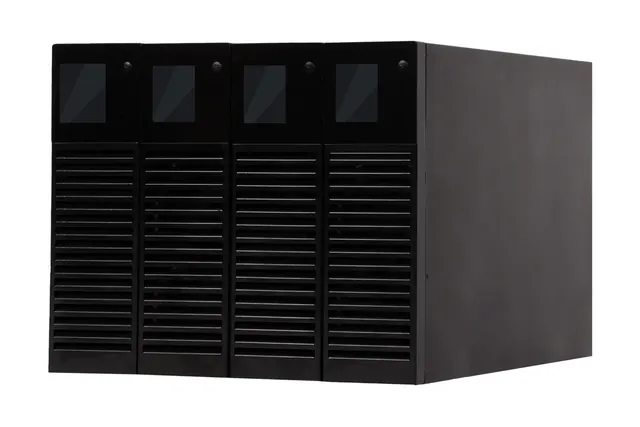
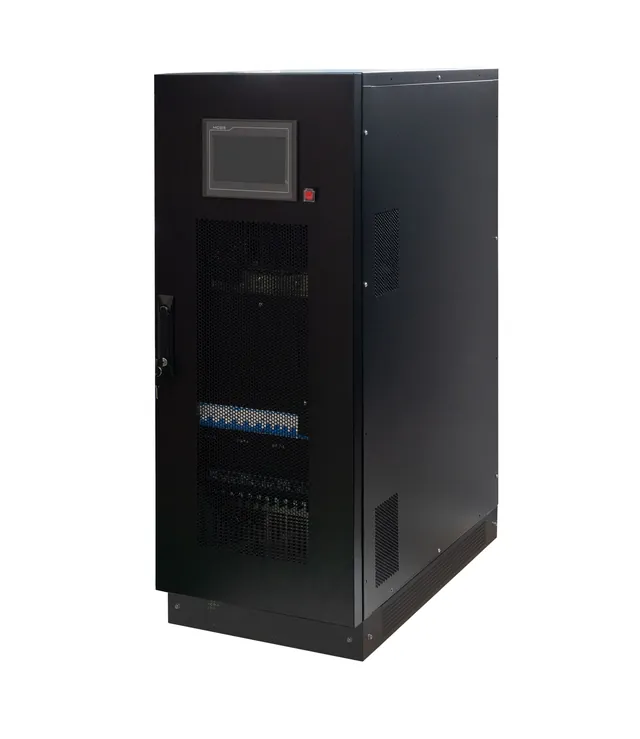
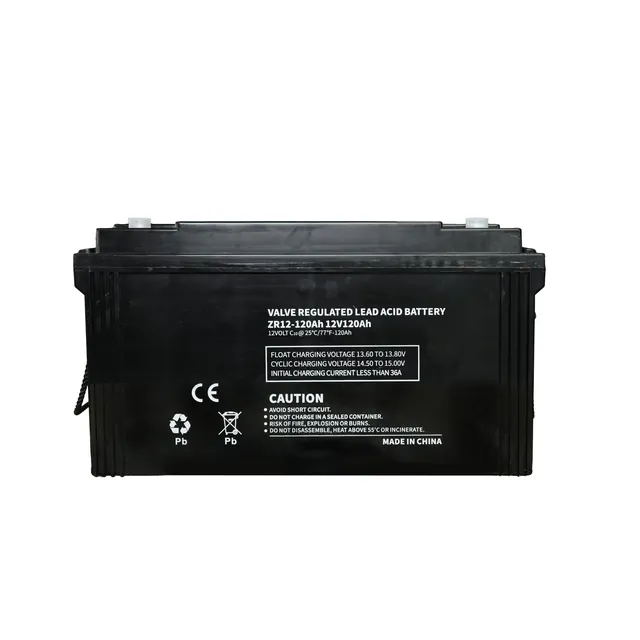
IEC 62040-3 sets out how to specify and test the performance of a UPS. Its classification code packs three answers into one short string: what the output depends on, what the waveform looks like, and how the voltage behaves when something changes.
VFI – SS – 111: input dependency, output waveform, dynamic performance.
Part 1: input dependency
| Code | Meaning | Typical topology |
|---|---|---|
| VFD | Output voltage and frequency both depend on the input | Offline / standby |
| VI | Output voltage is regulated, but frequency follows the input | Line-interactive |
| VFI | Output voltage and frequency are independent of the input | Online double conversion |
Only VFI isolates the load from voltage and frequency changes on the grid. If you are not sure why that matters, see online vs offline systems.
Part 2: output waveform
Two letters: the first for normal mode, the second for battery mode.
| Letter | Meaning |
|---|---|
| S | Sinusoidal, within limits with both linear and reference non-linear loads |
| X | Meets the sinusoidal limits with linear loads, but not non-linear ones |
| Y | Non-sinusoidal output |
SS means the output stays sinusoidal in both modes, so you do not lose waveform quality when the system goes onto battery.
Part 3: dynamic performance
Three digits, each a class from 1 to 3, in this order:
- Mode change: for example from normal mode to battery mode.
- Linear load step: a sudden change in a linear load.
- Non-linear load step: a sudden change in a non-linear load.
| Class | How the output behaves | Suits |
|---|---|---|
| 1 | Stays within the tightest tolerance curve, with no meaningful break | Sensitive and critical loads |
| 2 | Allows a short disturbance, in the order of 10 ms | Most IT supplies with some hold-up |
| 3 | Allows a longer disturbance | Less sensitive loads |
So VFI-SS-111 describes an online unit with a sinusoidal output in both modes and the tightest class on all three tests. The exact curves are in the standard; ask for the test report if a project depends on them.
What the code does not tell you
- Output power factor or kW rating; see kVA vs kW on a datasheet
- Efficiency, battery runtime, or overload capacity.
- Rated ambient temperature, altitude or dust protection.
- Whether a third party tested the performance or the maker declared it.
Other parts of the standard
Performance is only one part of the IEC 62040 series. Part 1 covers safety and part 2 covers electromagnetic compatibility, and these are what CE files usually refer to. A CE mark therefore tells you nothing about the VFI-SS-111 code. Ask for each one separately.
Our high-frequency range is CE tested to EN IEC 62040-1 and EN IEC 62040-2. See online UPS systems, and tell us if a project specifies a performance class so we can confirm it before quoting.