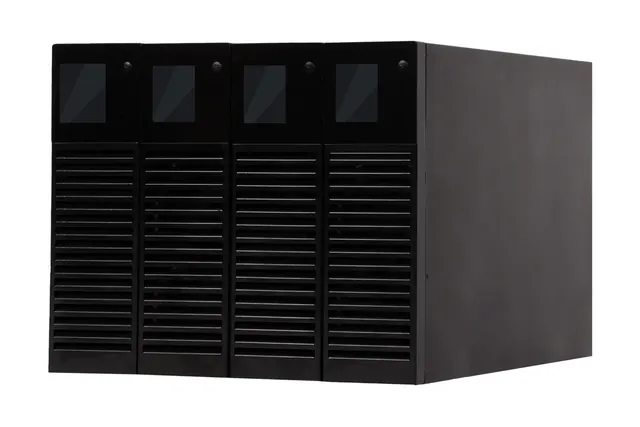
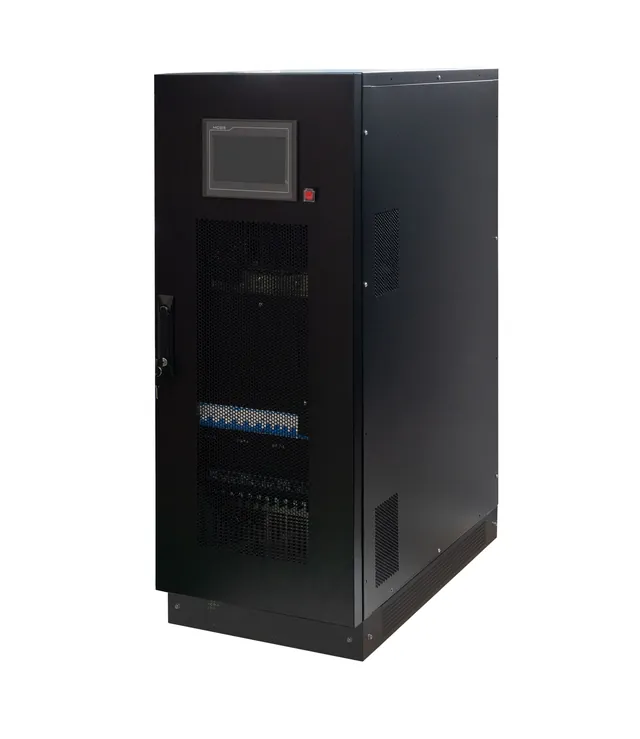
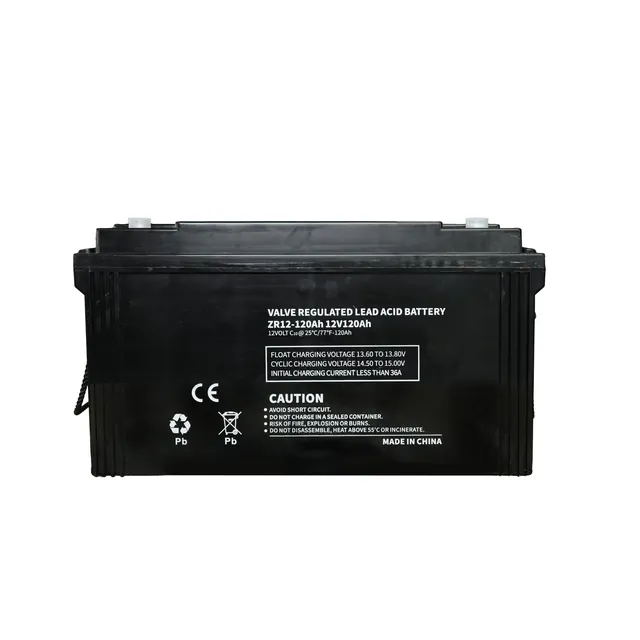
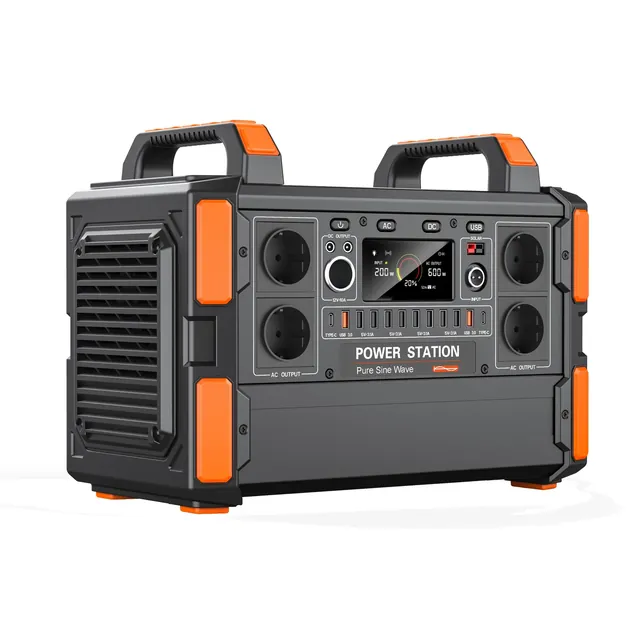
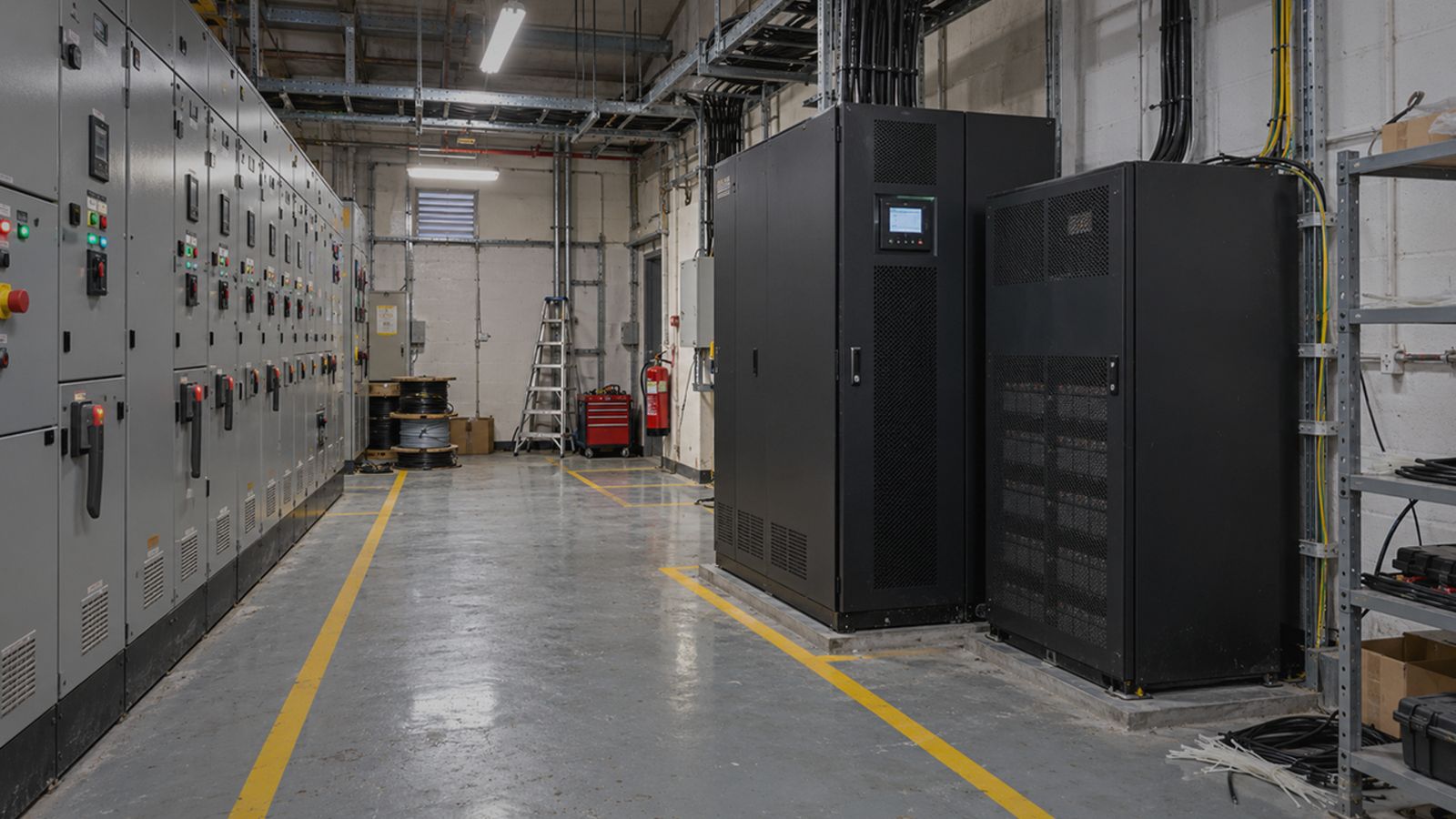
A voltage dip of a fraction of a second can stop a line for an hour. The motors ride through it. The controller does not, and the restart is what costs you: scrapped product in the machine, lost recipes, and a robot that has to be homed by hand.
Putting the whole line behind one large system is rarely the answer. Start by sorting the load.
Sort the load by what happens when it stops
| Load group | Typical items | If power is lost | Usual protection |
|---|---|---|---|
| Control | PLCs, HMIs, safety relays, sensors, I/O | Line stops, state and recipes can be lost | Always on the online UPS |
| Data | SCADA, MES terminals, network switches, historians | Records and traceability are lost | Always on the online UPS |
| Motion | Servo drives, robot controllers | Uncontrolled stop, re-homing, possible collision | Case by case, see below |
| Process power | Large motors, pumps, heaters, compressors | Slow or safe stop in most cases | Usually not on the UPS |
Control and data: the easy decision
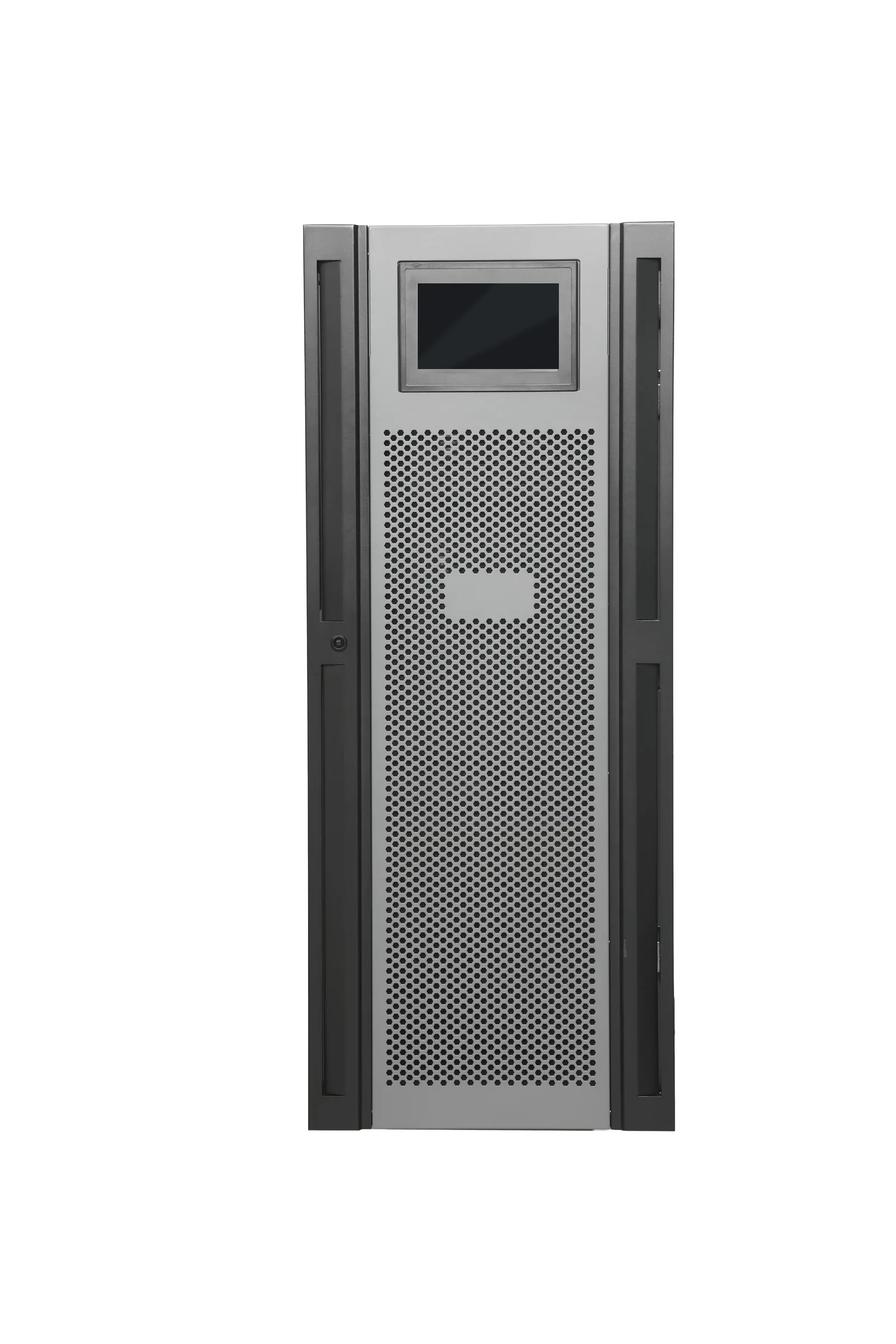
Control and data loads are small compared with the line and very sensitive to dips, so they should always sit behind a double-conversion unit. Several minutes of runtime is often enough to ride through a dip, save state and shut down in order.
Drives and robots: decide by the stop you want
Motion is where the real decisions are. There are two common approaches:
- Protect the controller only. The robot stops when the drive power goes, but the controller stays alive, keeps its position and reports what happened. This is usually enough, and much cheaper.
- Protect the drives too. Worth it when a process must finish its motion, for example a robot holding a part in a press or a hot process that cannot stop halfway. Size for regeneration and peak current, not average power.
Ask the machine builder which stop category the machine expects on power loss. The answer usually decides whether the drives need protection at all.
Sizing notes specific to the factory floor
- Inrush. Direct-on-line motors commonly draw 6 to 8 times running current at start. Keep them off the UPS, or size for them. A transformer-based unit tolerates this better; see transformer-based vs transformerless
- Harmonics. Drives draw non-sinusoidal current. Check the output distortion the unit is rated for with a non-linear load.
- Heat and dust. Check the rated ambient temperature, and whether filters are fitted and can be changed without shutting down.
- Maintenance bypass. A line that runs around the clock needs a way to service the unit without stopping production.
What to send when you ask for a quote
- A load list by group, in kW and kVA, with single-phase or three-phase marked.
- Input voltage, frequency and how unstable the grid is on site.
- The runtime you want, and what should happen when it ends.
- Ambient temperature, altitude and room size.
More on this application: power protection for manufacturing and the industrial UPS range.